

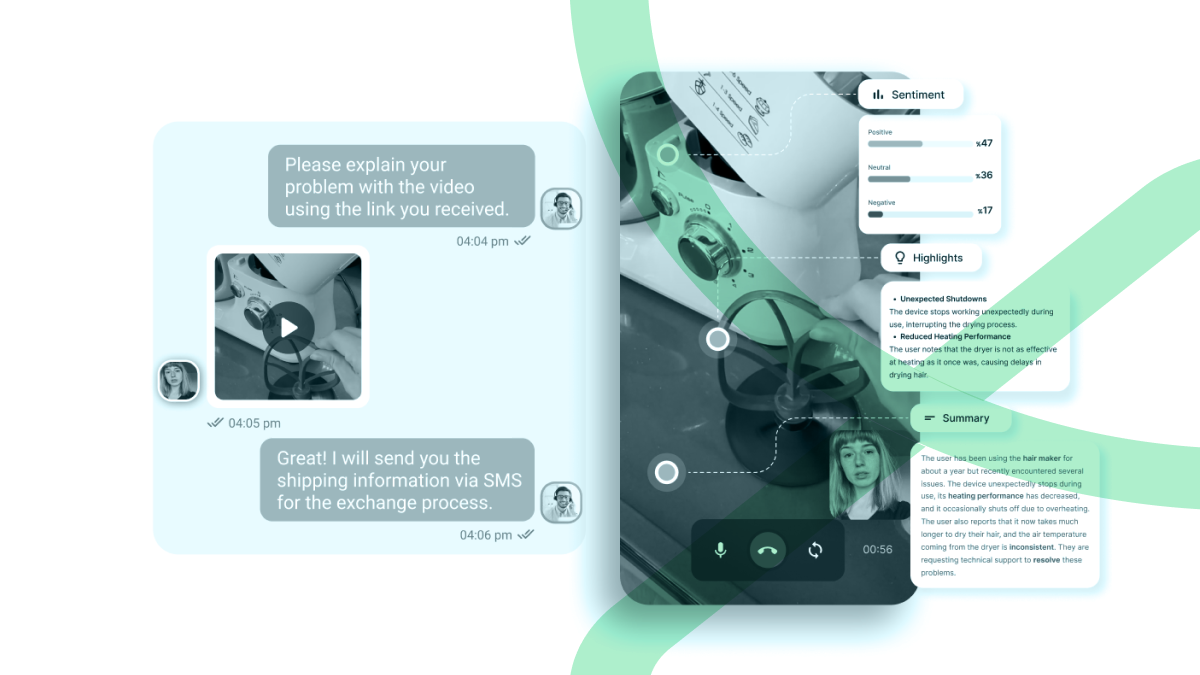

Video help desk software is revolutionizing customer support by enabling companies to provide real-time, face-to-face interactions between support agents and customers through digital channels. This technology enhances the customer experience, increases efficiency, and offers cost savings for businesses seeking to improve their remote support capabilities.
What is Video Help Desk Software?
Video help desk software enables companies to provide real-time, visual customer support through digital channels. This technology facilitates face-to-face interactions between support agents and customers, adding a personal touch to remote assistance. Key features of video help desk software typically include:
- High-definition video streaming capabilities
- Screen sharing functionality for visual demonstrations
- Real-time chat and file sharing options
- Integration with existing customer relationship management (CRM) systems
- Recording capabilities for quality assurance and training purposes
By leveraging these features, businesses can enhance communication clarity, improve problem resolution rates, and create a more engaging support experience for their customers.
Providing customer support through video channels offers transformative benefits that go beyond traditional methods:
- Enhanced Communication: Face-to-face interaction fosters a personal connection, reduces misunderstandings, and enables better handling of complex issues, leading to higher satisfaction rates.
- Efficiency Gains: Visual demonstrations and screen sharing accelerate problem resolution and minimize back-and-forth communication.
- Cost Effectiveness: Fewer in-person visits and improved first-call resolution rates help businesses cut operational costs while optimizing resource allocation.
These advantages make video support a compelling choice for companies aiming to elevate their customer service experience.
Key Benefits of Video Support
Providing customer support through video channels offers transformative benefits that go beyond traditional methods:

- Enhanced Communication: Face-to-face interaction fosters a personal connection, reduces misunderstandings, and enables better handling of complex issues, leading to higher satisfaction rates.
- Efficiency Gains: Visual demonstrations and screen sharing accelerate problem resolution and minimize back-and-forth communication.
- Cost Effectiveness: Fewer in-person visits and improved first-call resolution rates help businesses cut operational costs while optimizing resource allocation.
These advantages make video support a compelling choice for companies aiming to elevate their customer service experience.
Top Video Help Desk Solutions
Several leading video help desk solutions offer comprehensive features to enhance customer support:
- RecRam: A cutting-edge platform specializing in AI-driven video support. RecRam enables customers to share video issues easily, automates problem analysis, and provides instant resolutions by integrating with CRM systems like Zendesk and Salesforce. It also excels in video-based customer feedback collection and troubleshooting tools.
- VideoAsk: Known for its interactive video messaging and form capabilities, VideoAsk allows businesses to collect customer feedback, troubleshoot problems visually, and deliver personalized support experiences.
- Vidyard: A powerful video platform designed for customer engagement and support. Vidyard focuses on high-quality video communication, analytics, and seamless integrations with business tools for enhanced customer experience.
- Viewabo: A video support tool designed for remote troubleshooting. Viewabo enables customer service agents to see customer issues via live video feeds, simplifying technical problem resolution and reducing miscommunications.
- SnapCall: SnapCall brings video and voice communication directly into customer support workflows. It focuses on integrating video calls into chat systems, providing real-time support without switching platforms.
- TechSee: Known for its visual AI and augmented reality (AR) capabilities, TechSee empowers businesses to provide interactive visual support, making it an ideal solution for troubleshooting complex technical issues remotely.
- VideoSupport.io: A video-first customer support platform that emphasizes quick setup, ease of use, and seamless integration with existing support systems, helping businesses deliver personalized customer experiences.
- Zoom Video Support: Known for enterprise-grade video quality, robust security, and CRM integration capabilities.
- LiveAgent: An all-in-one platform combining video chat with ticketing systems and multi-channel support.
- Zendesk: Offers advanced video support features, comprehensive analytics, and custom branding options.
- Intercom: Provides real-time video messaging, automated customer routing, and knowledge base integration.
| Feature | RecRam | Viewabo | SnapCall | TechSee | VideoSupport.io |
| AI-Driven Video Analysis | Yes | No | Limited | Yes | No |
| CRM Integration | Comprehensive | Limited | Basic | Comprehensive | Basic |
| Video Feedback Collection | Seamless | Not Supported | Limited | No Dedicated Tools | Basic |
| Real-Time Video Support | Fast and Intuitive | Supported | Embedded Video Calls | Interactive AR | Supported |
| Automated Troubleshooting | AI-Powered | Manual | Human-Driven | AR-Guided | Limited |
| Ease of Use | Highly Intuitive | Easy | Straightforward | Complex | Simple |
| Scalability for Businesses | Enterprise-Ready | SMB-Focused | Great for SMBs | Enterprise-Suited | Small Teams |
| Video-First Design | Core Offering | Secondary | Primary | AR-Focused | Core Feature |
| Custom Branding Options | Fully Customizable | Limited | Basic | Supported | Moderate |
| Sentiment Analysis | Built-In | Not Available | Not Available | Not Available | Not Available |
| Pricing | Flexible | Affordable | Moderate | Premium | Moderate |
These solutions cater to various business needs, offering a range of functionalities from HD video quality to seamless third-party integrations, enabling companies to choose the best fit for their specific requirements.
Implementation Best Practices

Successful implementation of video help desk software requires a comprehensive approach. Prioritize thorough agent training, covering technical setup, customer interaction best practices, and software functionality. Develop clear documentation to ensure consistent service quality. Security measures are paramount – implement end-to-end encryption, secure authentication protocols, and robust data protection policies to safeguard sensitive customer information. Regularly monitor system performance, track quality metrics, and collect customer feedback to continuously improve the support experience. Staying compliant with industry standards and keeping the software updated are crucial for maintaining a secure and efficient video support system.
Jeff Bezos
, the founder of Amazon, underscores the importance of balancing flexibility and resilience in innovation: “With innovation, there isn’t a last nugget. Every new thing creates two new questions and two new opportunities”. This philosophy resonates with the adaptability required for implementing video help desk solutions, which continually evolve to address customer needs.

Product Damage Documentation
Video solutions have become increasingly important for addressing issues with physical and damaged products, offering both customers and businesses effective ways to document, assess, and resolve problems. Unboxing videos serve as a crucial tool for ensuring product quality and transparency in e-commerce transactions. When customers record the unboxing process, it provides visual evidence of the product’s condition upon arrival, which is invaluable for both parties in case of damage or defects.

For businesses, implementing a policy that encourages customers to create unboxing videos can significantly streamline the return and replacement process. These videos serve as indisputable proof of the product’s condition, reducing disputes and simplifying insurance claims. Some companies even require unboxing videos as part of their claims process, highlighting the growing importance of this practice in modern retail.
When damage does occur, video documentation becomes essential for efficient resolution. Customers should be advised to thoroughly inspect the product on camera, showing all angles and any visible defects[1]. This visual evidence helps customer service representatives assess the situation quickly and accurately, often leading to faster resolutions and improved customer satisfaction.
For businesses dealing with returns or repairs, video tutorials can be an effective way to guide customers through simple troubleshooting steps or minor repairs. This approach can reduce the need for returns or in-person service calls, saving time and resources for both parties.
In cases where products are severely damaged or corrupted, such as with digital video files, specialized video repair software can be employed. These tools can often recover or repair corrupted video content, which is particularly useful for businesses that rely heavily on video assets.
By leveraging video solutions, companies can enhance their customer service, streamline their return processes, and maintain transparency in their operations. This not only protects businesses from fraudulent claims but also provides customers with peace of mind, knowing that they have visual evidence to support their concerns if issues arise.
Streamlined Issue Escalation Process
Asynchronous video customer support significantly streamlines the escalation of physical product issues by providing a visual and detailed medium for customers to document problems and for support teams to offer solutions. This approach enhances the efficiency and effectiveness of the support process in several ways:

Improved Issue Documentation:
Customers can record videos showcasing the physical product issue at their convenience, providing clear visual evidence of the problem. This eliminates the need for lengthy written descriptions and reduces misunderstandings that often occur with text-based communication. For instance, if a customer receives a damaged Devialet product, they can easily capture video footage of the defect, allowing support teams to quickly assess the severity of the issue.
Faster Problem Diagnosis:
Support teams can review customer-submitted videos at any time, enabling them to quickly identify and diagnose issues without the need for real-time interaction. This asynchronous approach allows support agents to analyze problems thoroughly, consult with colleagues if necessary, and develop appropriate solutions more efficiently. The visual nature of the video helps support teams understand complex issues that may be difficult to describe in writing, leading to more accurate diagnoses.
Efficient Escalation Process:
When physical product issues require escalation, asynchronous video support facilitates a smoother process. Support agents can easily share customer-submitted videos with higher-tier support or product specialists, providing them with comprehensive visual information about the issue. This eliminates the need for multiple rounds of communication and ensures that escalated cases are handled with all necessary context, reducing resolution time.
Enhanced Solution Delivery:
Support teams can create detailed video responses demonstrating step-by-step solutions or explaining complex procedures for addressing physical product issues. These video tutorials can be easily shared with customers, allowing them to follow along at their own pace and revisit the instructions as needed. This approach is particularly effective for troubleshooting hardware problems or guiding customers through product repairs.
Reduced Need for In-Person Inspections:
Asynchronous video support often eliminates the need for in-person product inspections or returns. By reviewing customer-submitted videos, support teams can often determine whether a product requires repair or replacement without physically examining it. This saves time and resources for both the company and the customer, streamlining the overall support process.
Improved Documentation for Warranty Claims:
Video evidence of physical product issues serves as valuable documentation for warranty claims or returns. This visual proof helps expedite the claims process and reduces disputes, as both customers and support teams have access to clear, indisputable evidence of the product’s condition.
By leveraging asynchronous video support, companies can significantly improve their ability to handle and escalate physical product issues efficiently. This approach not only enhances the customer experience but also optimizes support team resources, leading to faster resolution times and increased customer satisfaction[4].
Common Device Issues
Consumer electronics malfunctions and post-purchase experiences are significant concerns for both manufacturers and consumers in the rapidly evolving tech landscape. A study indicates that approximately 20% of consumers experience a malfunction within the first 30 days of purchase, with common complaints including software glitches and hardware failures. This initial period often encompasses setup challenges and software bugs, which can significantly impact user satisfaction.
The timeline of tech troubles extends beyond the initial usage period. Between 3 to 6 months post-purchase, another wave of issues typically arises, including wear-and-tear problems or software updates that introduce new bugs. Around 30% of users report ongoing issues during this timeframe, particularly with devices that rely heavily on software updates or connectivity features.
Resolution times for consumer electronics issues can vary significantly, ranging from 1 week to several months, depending on the complexity of the problem and the responsiveness of customer support. This variability in resolution times can lead to frustration and dissatisfaction among consumers, potentially impacting brand loyalty and future purchasing decisions.
To address these challenges, consumer electronics companies are implementing various strategies to enhance post-purchase experiences and reduce the incidence of malfunctions. These include:
- Enhanced Quality Control: Investing in more rigorous quality control measures during the manufacturing process to identify and rectify defects before products reach consumers.
- Comprehensive User Manuals: Providing detailed and easy-to-understand user manuals to help consumers set up and use their devices correctly, reducing the likelihood of user error.
- Leveraging IoT Technology: The Internet of Things (IoT) is transforming the consumer electronics industry, enabling remote device monitoring and improved product quality through data analysis. Manufacturers can analyze consumer behavior data to enhance product features and fix issues more efficiently.
- Video Customer Support: Implementing video support solutions to improve customer service and reduce resolution times. Video tutorials, troubleshooting guides, and live video support can provide more effective assistance than traditional text-based methods.
- Proactive Issue Resolution: Utilizing IoT connectivity to identify and address potential issues before they become significant problems for consumers.
- Improved Documentation Systems: Implementing effective ways to document customer technical issues, such as using ticketing systems and creating detailed records of diagnoses and resolutions.
By adopting these strategies, consumer electronics companies can significantly improve post-purchase experiences, reduce the incidence of malfunctions, and enhance overall customer satisfaction. As the industry continues to evolve, addressing these challenges will be crucial for maintaining brand loyalty and staying competitive in the market.
AI-Powered Video Support
AI-powered video support software is revolutionizing the way companies handle customer service inquiries, significantly reducing ticket resolution times and improving overall efficiency. By leveraging advanced technologies, these solutions offer a range of features that streamline the support process and enhance the customer experience.

One of the key advantages of AI video support software is automated ticket classification and prioritization. The system can instantly analyze incoming video content, classify issues based on visual cues and context, and route them to the appropriate support teams. This automation eliminates the time-consuming manual sorting process, reducing response times and ensuring that critical issues are addressed promptly.
AI-driven sentiment analysis is another powerful feature that helps prioritize and expedite tickets based on customer satisfaction levels. By analyzing facial expressions, tone of voice, and other visual and audio cues in video submissions, the system can identify urgent or sensitive issues that require immediate attention, allowing support teams to focus on high-priority cases.
Video support software equipped with AI can also provide instant responses to common queries by pulling information from the knowledge base. This capability allows for the automatic resolution of simple issues without human intervention, freeing up support staff to handle more complex problems.
Machine learning algorithms integrated into these systems can analyze historical data to identify patterns and predict ticket volumes. This predictive capability enables support teams to allocate resources more effectively and prepare for potential spikes in customer inquiries.
AI-powered video support software often includes natural language processing capabilities, allowing customers to describe their issues verbally or through text accompanying their video submissions. The system can then interpret this information to provide more accurate and relevant solutions[1].
Another significant advantage is the ability to offer 24/7 availability through AI-powered chatbots and virtual assistants. These can handle basic inquiries and provide initial support at any time, ensuring that customers receive assistance even outside of regular business hours.

By implementing AI video support software, companies can expect to see substantial improvements in their support metrics. For instance, some solutions have been shown to help IT professionals reduce escalations by 40% and resolve tickets 20% faster. This increased efficiency not only improves customer satisfaction but also allows support teams to handle a higher volume of inquiries without increasing staff.
As AI technology continues to advance, video support software is becoming increasingly sophisticated in its ability to understand and resolve complex issues. By combining visual information with advanced analytics and machine learning, these systems are setting new standards for customer support efficiency and effectiveness.
Using Video for Product Inspections
Video technology has revolutionized product inspection processes, offering manufacturers and quality control teams powerful tools to enhance efficiency and accuracy. Vision inspection systems in manufacturing provide numerous benefits, including improved quality control, increased efficiency, and reduced costs. These systems use high-definition cameras and advanced image processing algorithms to detect defects and inconsistencies that might be missed by human inspectors.

Key advantages of using video for product inspections include:
- Enhanced visual inspection capabilities, allowing for detailed examination of hard-to-reach areas
- Improved efficiency through automated defect detection and classification
- Reduced downtime and minimized disassembly requirements
- Cost savings from fewer product recalls and minimized waste
- Consistent and reliable results, eliminating human error and fatigue factors
By implementing AI-based vision inspection software, companies can further improve their quality control processes, ensuring higher product standards and customer satisfaction. These advanced systems can analyze complex visual data in real-time, enabling faster and more accurate decision-making in production environments.
Challenges in Adopting Video Help Desk Software
While video help desk software offers numerous benefits, organizations face several challenges when adopting and implementing these solutions:
- Resistance to change: Employees may be reluctant to adopt new technologies, especially if they’re comfortable with existing systems. This resistance can slow down the implementation process and reduce the effectiveness of the new software.
- Technical infrastructure requirements: Video help desk software often demands robust network infrastructure and high-speed internet connections to function optimally. Organizations may need to upgrade their existing systems, which can be costly and time-consuming.
- Training and skill development: Support staff need to be trained not only in using the new software but also in effective video communication techniques. This requires time and resources, and some employees may struggle to adapt to the new medium.
- Privacy and security concerns: Video interactions raise new privacy and security challenges. Organizations must ensure compliance with data protection regulations and implement measures to safeguard sensitive customer information shared during video sessions.
- Integration complexity: Integrating video help desk software with existing CRM platforms, email servers, and other third-party applications can be complex and time-consuming. This may require additional technical expertise or support from vendors.
- Scalability issues: As customer demand for video support grows, organizations may face challenges in scaling their infrastructure and support teams to meet this increased demand while maintaining service quality.
- Audio/visual quality: Poor video quality or muffled audio can significantly impact the customer experience and appear unprofessional. Investing in high-quality equipment and ensuring consistent audio/visual standards across support teams can be challenging.
- Cultural and language barriers: Video interactions may amplify cultural and language differences, potentially leading to misunderstandings or communication breakdowns. Organizations need to ensure their support staff are equipped to handle diverse customer bases.
- Measuring effectiveness: Tracking key metrics and measuring the ROI of video help desk software can be challenging, especially when comparing it to traditional support channels. Organizations need to develop new KPIs and analytics tools to effectively evaluate the impact of video support.
- Customer adoption: Not all customers may be comfortable with or have access to the technology required for video support. Organizations need to provide alternative support channels and educate customers on the benefits of video interactions.
By addressing these challenges proactively, organizations can maximize the benefits of video help desk software and improve their overall customer support experience.
RecRam’s Unique Advantages
RecRam stands out in the video support software market with several key advantages and differentiating features:
AI-Powered Analysis: RecRam’s advanced AI technology automatically analyzes customer video submissions, generating insights, summaries, and key highlights. This capability allows support teams to quickly understand issues without manually reviewing entire videos, significantly reducing resolution times by up to 82%.
Browser-Based Recording: Unlike solutions requiring app downloads, RecRam enables customers to record and send videos directly from their web browsers. This seamless process improves accessibility and speeds up issue reporting.
Multilingual Support: RecRam’s AI can translate conversations into over 50 languages, breaking down language barriers and enabling global customer support.
Comprehensive Data Capture: In addition to video, RecRam supports photo, audio, and file sharing, providing a holistic view of customer issues.
Integration with Knowledge Base: The AI automatically suggests relevant knowledge base articles based on video content, empowering support agents with instant access to potential solutions[3].
Interactive Features: RecRam offers interactive video guides and surveys, allowing businesses to provide step-by-step visual assistance and gather detailed feedback.
Real-Time Visual Assistance: The platform enables support teams to offer live visual guidance, reducing resolution time and enhancing customer satisfaction.
Automated Customer Insights: RecRam generates actionable data and trends from customer interactions, helping businesses identify areas for improvement.
Personalization: The platform offers tailored feedback solutions, ensuring each customer receives a unique support experience.
Efficiency Gains: RecRam has been shown to reduce problem-solving effort by 60% and increase customer satisfaction by 40%.
Industry-Specific Solutions: The platform adapts to various sectors, offering customized video and AI-powered solutions for different industry challenges.
These features collectively differentiate RecRam by offering a more comprehensive, AI-driven, and user-friendly video support solution compared to alternatives. The platform’s focus on seamless customer interaction, coupled with powerful AI analysis and insights generation, positions it as a leading choice for businesses seeking to enhance their customer support capabilities through video technology.
Video-Assisted Problem Diagnosis
In scenarios where specific problems cannot be solved immediately—such as issues with smart home devices, medical equipment, or industrial machinery—leveraging video responses from customers significantly simplifies the ticket resolution process and boosts ROI. Videos provide clear, visual evidence of the problem, reducing ambiguity and enabling support teams to diagnose issues more accurately and quickly.
For smart home devices, video submissions allow customers to showcase malfunctions in real-time, such as connectivity failures or device misbehavior. This eliminates the need for lengthy written explanations and helps support teams pinpoint root causes faster. For instance, a customer struggling with a smart thermostat can record its error messages or unresponsive interface, allowing agents to identify whether the issue lies in software settings or hardware compatibility. By resolving these issues remotely through video-based diagnosis, companies can reduce product returns—22% of which are often due to unresolved technical problems—and minimize costs associated with unnecessary refunds or replacements.
In medical and industrial sectors, where downtime can be critical, video responses from end-users are invaluable. Customers can visually document equipment malfunctions, such as unusual sounds in medical devices or performance inconsistencies in industrial machinery. Support teams can then analyze these videos to determine whether the issue requires on-site repair or can be resolved remotely through guided troubleshooting. This approach reduces the need for costly technician visits while expediting resolution times. For example, augmented reality tools combined with video submissions allow experts to guide local staff through complex diagnostics without travel expenses, freeing up resources for other high-priority tasks.
Video-based problem diagnosis also enhances ROI by improving first-call resolution rates and reducing ticket handling time. AI-powered video support tools can analyze submitted videos for visual cues, classify issues automatically, and suggest relevant solutions from a knowledge base. This automation not only accelerates resolutions but also reduces the workload on human agents. Additionally, sentiment analysis of customer-submitted videos helps prioritize urgent cases, ensuring critical problems are addressed promptly while maintaining customer satisfaction.
By integrating video responses into their support systems, companies across these industries benefit from reduced operational costs, faster issue resolution, and improved customer loyalty. These efficiencies directly translate into higher ROI by optimizing resource allocation and minimizing revenue loss caused by unresolved issues or prolonged equipment downtime.
Real-Time Video Assistance for Repairs
Real-time video assistance has revolutionized the repair process across various industries, offering immediate expert guidance to technicians and customers alike. This technology enables remote experts to visually assess problems and provide step-by-step instructions, significantly reducing downtime and improving first-time fix rates.
One of the key advantages of real-time video assistance is the ability to enhance diagnostic accuracy. By allowing experts to see the issue firsthand, they can make more precise assessments and provide tailored solutions. This visual input leads to faster problem resolution, minimizing equipment downtime and improving overall efficiency.
For complex repairs, live video support facilitates the breakdown of intricate problems into manageable steps. This approach is particularly beneficial in industries such as construction, where on-site technicians can receive interactive guidance for equipment maintenance and repairs. Similarly, in the automotive sector, insurance companies utilize this technology for efficient inspection of accident sites and vehicle damage assessment.
The implementation of real-time video assistance has shown significant improvements in service metrics. For instance, some companies have reported reducing problem-solving effort by 60% and increasing customer satisfaction by 40%. These improvements stem from the ability to provide immediate, visual guidance that closely mimics in-person support.
In the consumer electronics sector, where post-purchase issues are common, real-time video assistance plays a crucial role. With approximately 20% of consumers experiencing malfunctions within the first 30 days of purchase, this technology allows for quick troubleshooting and resolution of software glitches and hardware failures. It also helps address the ongoing issues reported by about 30% of users between 3 to 6 months post-purchase, particularly with devices relying on software updates or connectivity features.
To maximize the benefits of real-time video assistance, companies should consider implementing high-definition video streaming capabilities, screen sharing functionality, and integration with existing customer relationship management (CRM) systems. Additionally, ensuring secure cloud-based solutions optimized for remote visual calls is crucial for protecting customer privacy and data.
By leveraging real-time video assistance for repairs, businesses can significantly reduce the need for in-person visits, cut operational costs, and improve customer satisfaction. This technology not only streamlines the repair process but also empowers customers and technicians with immediate access to expert knowledge, ultimately leading to faster resolutions and enhanced service quality.
Overall Impact and Outlook
Video help desk software has emerged as a transformative tool in customer support, offering significant benefits for both businesses and consumers. By enabling face-to-face interactions and visual demonstrations, these solutions have been shown to increase first contact resolution rates by up to 25% and improve net promoter scores by over 30%. This technology not only enhances communication clarity but also streamlines the support process, leading to faster issue resolution and improved customer satisfaction.
The adoption of video support solutions presents challenges, including infrastructure requirements, staff training needs, and potential privacy concerns. However, the advantages far outweigh these obstacles. Video support reduces the workload on agents, improves scalability, and provides valuable data for analytics and continuous improvement. As customer expectations evolve, businesses that leverage video help desk software position themselves at the forefront of customer service innovation, offering a more personalized, efficient, and effective support experience that can significantly impact customer loyalty and overall business success.
Ready to try it?
Stop reading. Start listening.
Recram turns feedback into video conversations your team actually watches.
Start Free — No Credit Card
Written by
Nebi Kara
Part of the Recram team — building the future of video‑first feedback.